For years, AI operated as a black box. Question in, answer out, mystery in between. Reasoning models change that. When you can see how AI thinks through your query, weighs your context, and arrives at conclusions, everything shifts. You build trust. You improve your prompts. You steer conversations with precision. The thinking bubble is not a distraction. It is your competitive advantage.

For years, AI felt like magic. You put a question in. An answer came out. What happened in between? A mystery.
This “black box” problem created a fundamental trust gap. How do you collaborate with something you cannot understand? How do you improve your prompts when you cannot see what went wrong?
Most people accepted this opacity as the cost of using AI. They treated large language models like vending machines. Insert prompt. Receive output. Hope for the best.
That approach worked for simple tasks. For genuine creative collaboration and complex ideation, it falls short.
The latest generation of reasoning models changes this dynamic entirely.
These models do not jump straight to answers. They think first. They consider context. They weigh options. They reason through problems before responding.
More importantly, that thinking process can now be visible.
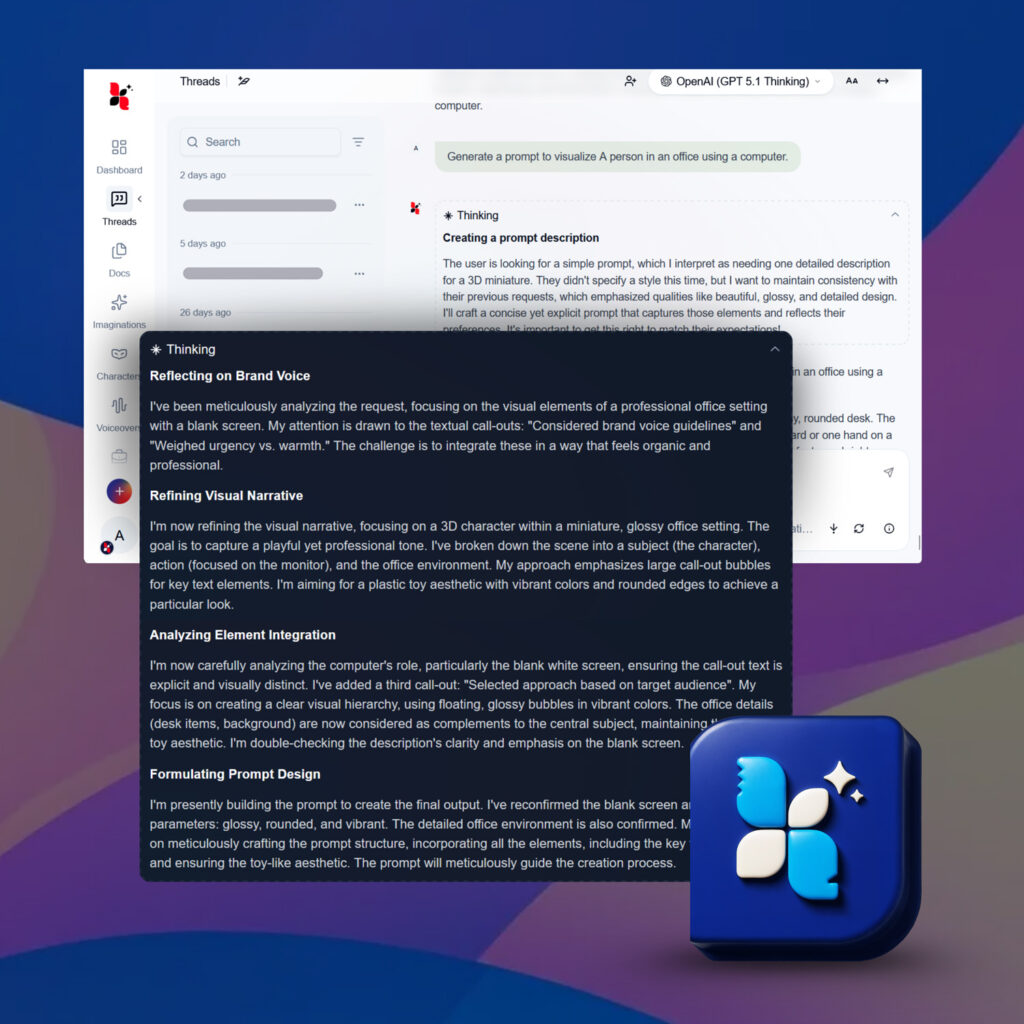
In Euryka, when you use reasoning models on our Pro plan, you see the thinking bubble. You watch the AI process your query, consider your brand context, and work through its logic before delivering a final response.
This is not a gimmick. It is a fundamental shift in how humans and AI can work together.
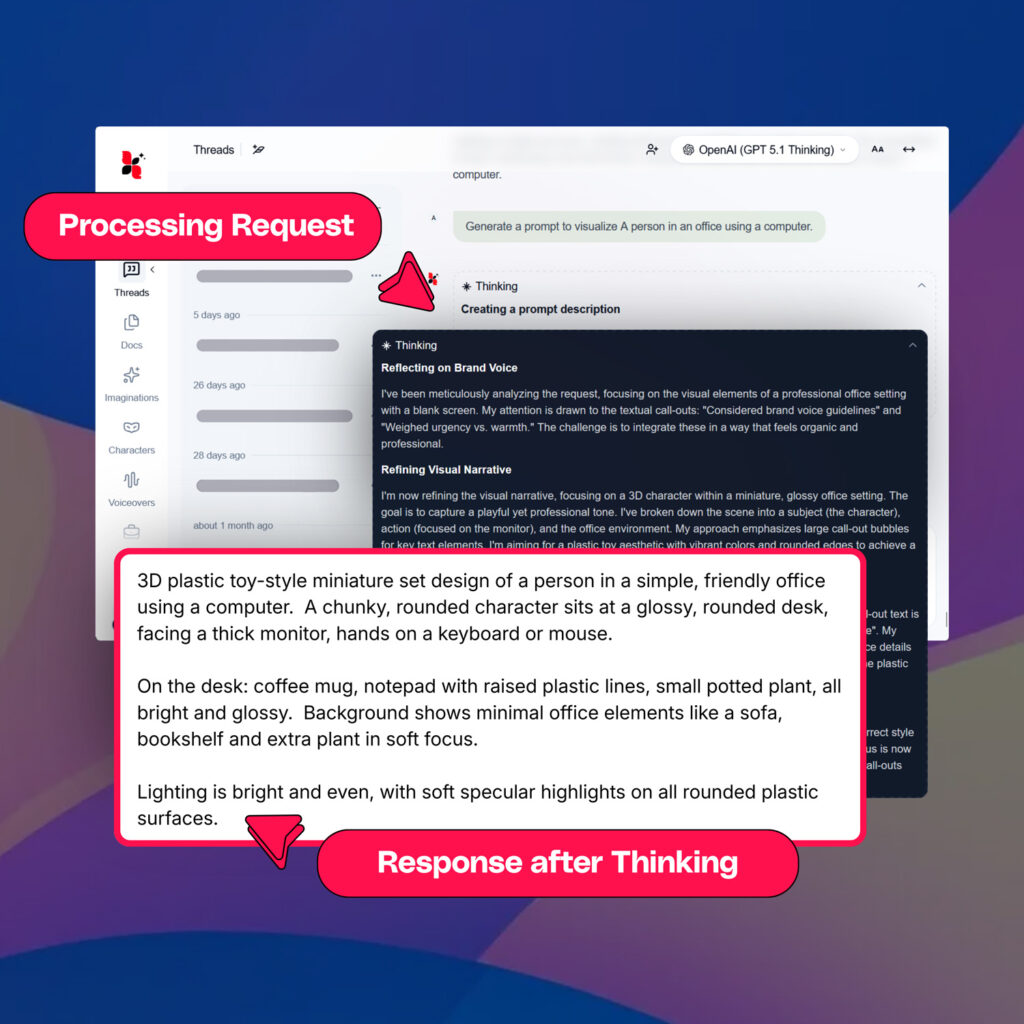
When you see how conclusions are reached, you stop guessing whether the AI understood you. You know. The reasoning is right there.
This transparency transforms AI from an unpredictable tool into a genuine thinking partner.
Here is where it gets practical.
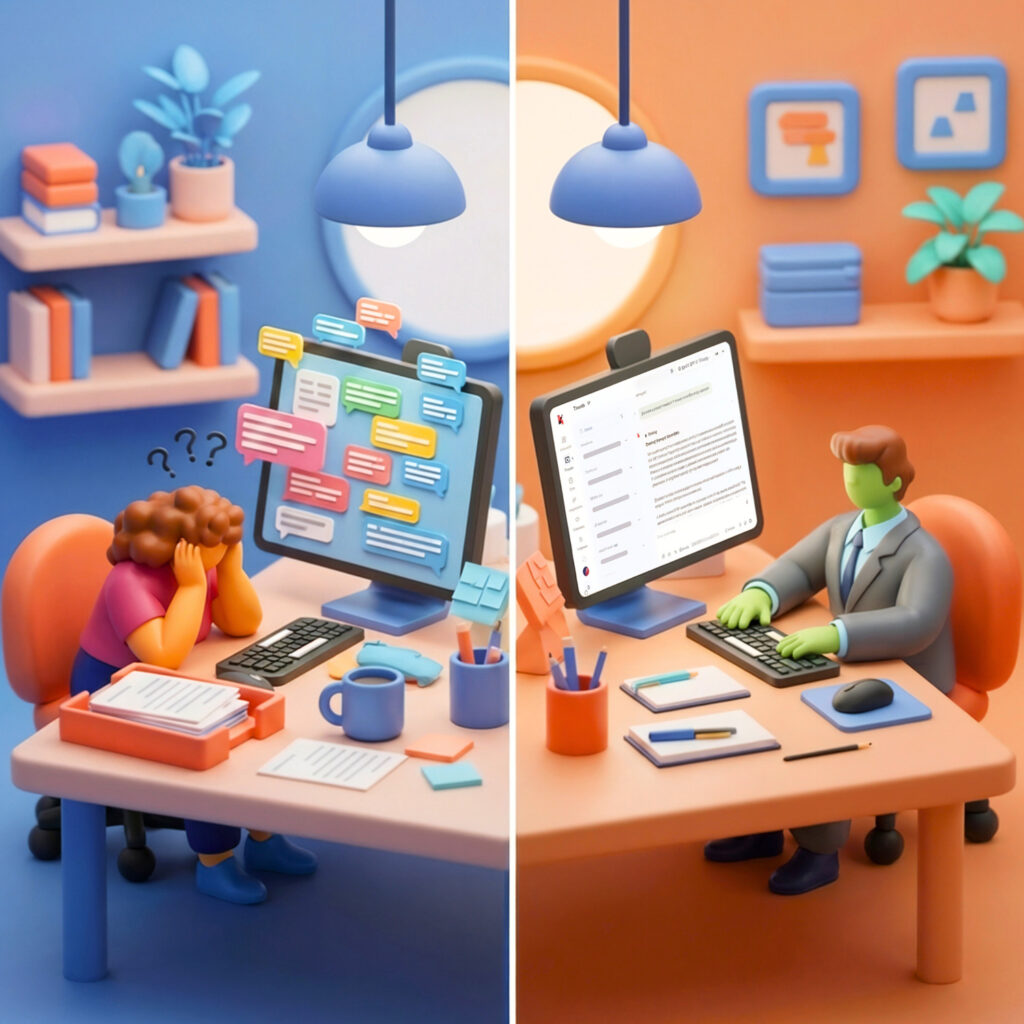
When you read the AI’s reasoning process, you understand how it interpreted your request. You see which parts of your context it prioritised. You notice where it made assumptions.
This insight directly improves your next message. Instead of trial and error, you have informed iteration.
This is the real advantage most people miss.
Once you understand how an AI arrived at its response, you can guide the conversation more effectively. You spot where its logic diverged from your intent. You can redirect with precision rather than frustration.
You and the AI end up on the same page. Not through luck, but through genuine understanding.
Yes, reading the thinking requires more attention. Some people collapse the reasoning bubble and never look back.
That is a missed opportunity.
The few extra seconds spent understanding AI reasoning pay dividends across an entire creative session. You iterate faster. You get better outputs. You develop intuition for how to phrase requests effectively.
Think of it like learning to read a collaborator’s working notes. Initially it takes effort. Eventually it becomes second nature, and your collaboration improves dramatically.
Imagine you ask Euryka to draft a campaign headline.
Without visible reasoning, you get a headline. Maybe it is good. Maybe it misses the mark. You provide feedback and hope the next version improves.
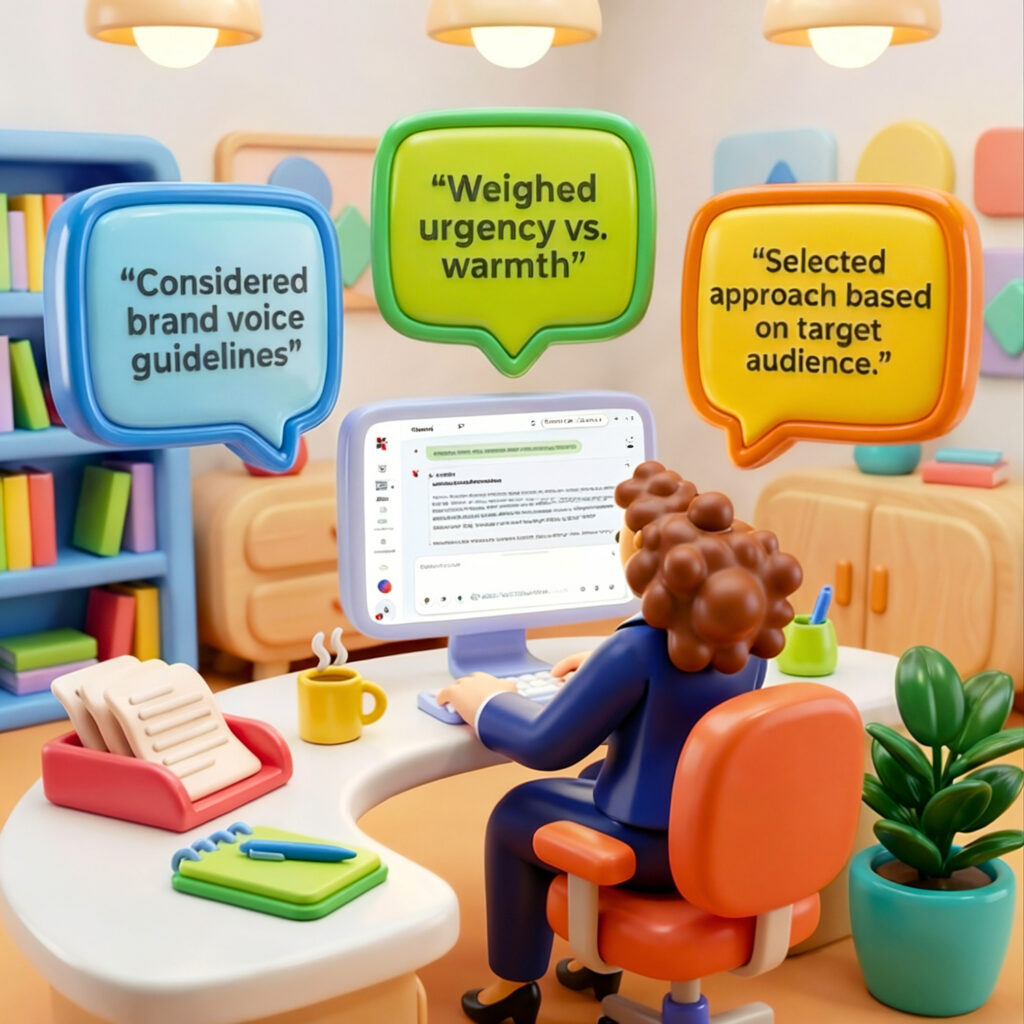
With visible reasoning, you see the AI consider your brand voice, weigh different angles, and explain why it chose a particular approach. If the headline misses, you know exactly why. Your feedback becomes surgical. The second draft hits the target.
Transparent reasoning is not just a feature. It represents a maturing relationship between humans and AI.
The organisations that learn to read and leverage AI thinking will outpace those still treating AI as a black box. They will iterate faster, build better outputs, and develop genuine AI fluency.
At Euryka, we expose this thinking deliberately. Our Pro plan gives you access to reasoning models precisely because we believe understanding how AI thinks is essential for serious creative work.
The black box era is ending. The question is whether you will open it.
Ready to move beyond black box AI? Euryka Pro gives you access to reasoning models with full visibility into the thinking process.