


Fast food. Slow brands.
Every successful F&B business begins with a recipe — and accumulates another: the Second Recipe, the sense of what the brand is and how it behaves. Growth does not erase it. It fragments it.


Fast food. Slow brands.
Whitepaper
What this paper covers.
Written for F&B founders, brand leads, marketing directors, and creative ops in packaged goods, café groups, and beverage businesses.
The product recipe is protected. The brand recipe is left to instinct.
Every successful food and beverage business begins with a recipe. It may be a closely guarded formula, a particular fermentation method, a family technique, or simply a conviction about how food should be made. Over time the recipe becomes more than a product specification; it becomes a standard, the thing against which everything else in the business is measured.
Yet the product is only part of what customers learn to recognise. They also come to know the warmth of the packaging, the confidence of the menu, the honesty of the ingredient story, the rhythm of the photography and the personality behind each campaign. These judgements form another kind of recipe entirely — call it the Second Recipe.
Most companies protect the first recipe rigorously, with specifications, quality checks and trained hands at every stage. The Second Recipe is usually left to instinct, and for a while instinct is enough. The difficulty arrives with growth, when products multiply, markets open, and retailers, distributors, franchisees and digital channels each begin asking for their own version of the story. The brand does not disappear. It begins, almost imperceptibly, to fragment.
Figure 01 · Five findings
Beyond the formula
Customers recognise a brand through packaging, tone, photography and story — not the product spec alone.
Taste as queue
The judgement that built the brand becomes the bottleneck when growth outpaces documented systems.
Many voices
Growth in F&B is equally a variation problem — buyers, operators, consumers and markets each need a different register.
Regulated copy
Allergens, nutrition and health claims turn creative work into a compliance exercise that must travel with every asset.
Judgement that travels
Brand knowledge must move with the work — not live in a founder's head or a forgotten folder.
F&B brands rarely lose their character through one bad campaign. They lose it through hundreds of reasonable decisions made without shared context.
One clear proposition. Dozens of assets.
Food and beverage is often discussed as one category, but it contains several very different businesses — packaged goods, café groups, beverage brands serving consumers and hospitality buyers at once. Their commercial models differ considerably. Their creative problem is remarkably similar.
-
Packaging, ecommerce, retail listings, trade sheets, social content, localised material.
-
Designers search for files; writers reinterpret tone; legal reviews familiar claims again.
-
What should have been translation of an approved idea becomes starting over.

Each output has a legitimate purpose. The problem is how the work is connected.
Every new product creates packaging, photography, descriptions, retailer content and launch communication. Every new channel creates another format, every new market another interpretation, and every regulated claim another approval step. The work multiplies faster than the underlying idea.
A product that begins with one clear proposition can become dozens of assets before it reaches the customer, and none of them is optional. When every asset begins as a separate brief, the organisation repeatedly reconstructs the same context. Brand managers find themselves explaining why something that appears polished still feels wrong. What should have been adaptation becomes reinvention.
Figure 02 · From one proposition to many outputs
One clear idea
Many connected assets
Each rebuilt from scratch

In the early years, the founder is the brand system.
They taste the product, approve the label and review the website. They know whether a photograph makes the food appear honest or artificial, which ingredient should lead the story, and which technical detail will only distract the customer. This judgement is rarely written down in full; it develops through repetition, the way a palate does.
-
Nobody needs documentation while this person is present.
-
Packaging agencies, social teams, distributors, export partners — each with a sensible interpretation.
-
Thoughtful on the website, aggressive in paid media, generic in retail — often within the same week.
More work comes back almost right. Review meetings grow longer.
Then the business grows. A packaging agency handles the new range, a social agency manages daily content, distributors create regional material, and an export partner translates the story for another market. Each contributor is capable, and each arrives at a sensible interpretation of the brief: the packaging agency emphasises shelf impact, the performance team emphasises conversion, the retailer emphasises price.
None of these choices is wrong in isolation. Together they produce a brand that sounds thoughtful on its website, aggressive in paid media and generic in retail, and the customer experiences all of it as one brand, often within the same week. The founder notices the drift before anyone can name it. Simple approvals begin to require explanation, and the team quietly becomes dependent on the few people who know what right feels like.
Growth has turned taste into a queue.
The point at which the very judgement that built the brand becomes its bottleneck. The founder still provides taste — but can no longer be the system through which every decision passes.
The visible campaign is only the surface. Beneath it sits a large translation exercise.
A new F&B product rarely has one launch. It requires the master packaging design and its variations, ecommerce imagery, retailer listings, social content, trade presentations and foodservice sheets. If the product enters several markets, each output may need localisation; if it carries nutrition or health-related claims, each expression needs review as well.
The product story must become a shelf story, the shelf story an ecommerce story, the ecommerce story a social story, each version carrying a different emphasis while preserving the same underlying character. The original thinking may take a day. Its distribution can take weeks. A useful question for any F&B leader follows from this: how much of the creative team's week is spent developing new ideas, and how much is spent adapting work that has already been approved?
Figure 03 · Create vs. adapt — typical pattern observed
Illustrative framing from conversations with F&B marketing teams — not a cited study. The proportion varies by category and channel mix, but the pattern is consistent: most creative labour goes to translating an approved idea, not originating one.
Figure 04 · Launch timeline — where the weeks go

Figure 05 · The launch surface vs. the launch stack
Good localisation does not copy the centre. It interprets the centre.
Growth is usually described as a volume problem: more products, more campaigns, more customers. In food and beverage it is equally a variation problem. A single brand may need to speak differently to a supermarket buyer, a restaurant operator, a health-conscious consumer and a distributor, and it may need to explain the same product in a country where the category is familiar and in another where it requires patient education.
The challenge is not to repeat one message everywhere, which would be consistency without intelligence. The challenge is to adapt without becoming unrecognisable. Interpretation requires context: the local team needs to know which elements are fixed, which can flex and which require approval, while the central team needs visibility without becoming the final editor of every caption, poster and menu.
Table 01 · Three models of brand control at scale
| Model | How it works | Strength | Failure mode |
|---|---|---|---|
| Rigid centralisation | Every decision returns to head office | Consistency enforced | Campaigns slow to a crawl; local relevance suffers |
| Uncontrolled decentralisation | Markets move independently with minimal shared rules | Speed and local responsiveness | Brand feels different everywhere it appears |
| Strong centre + local expression | Fixed principles, flexible execution within clear boundaries | Coherent yet intelligent adaptation | Rare — largely because the infrastructure to support it has not existed |
Terms like “natural” and “healthy” cannot be casual copywriting.
Food and beverage communication carries a regulatory weight that most other categories never encounter. Ingredient declarations, allergens, nutrition information and health-related claims are governed differently across markets. Language approved in one market may require modification in the next.
-
Ecommerce listings, advertisements, menu boards and social content.
-
A writer shortens a sentence; a regional team translates a phrase too literally.
-
Approved language available at the point of creation — not only at final review.

The answer is not to reduce human review. It is to reduce unnecessary review.
Their use depends on product composition, substantiation and local regulation. Allergen requirements add a further layer: the United States recognises nine major allergens under federal rules, while the European Union and United Kingdom require declarations covering fourteen categories.1,2,3
Nor is this merely a packaging concern. When assets are created independently, approved language changes through small, well-meaning edits. Each change appears minor; together they accumulate into risk. Most companies respond by routing everything through a small legal or regulatory team, which protects the business but creates delay, since reviewers check the same claims repeatedly because the approved context never travels with the work.
Table 02 · Major allergen categories by market
| Market | Major allergens declared | Framework |
|---|---|---|
| United States | 9 categories | FDA food allergen rules |
| European Union | 14 categories | EU mandatory food information |
| United Kingdom | 14 categories | UK FSA allergen labelling |
Where approved claims must travel
- Primary and variant packaging, multipacks, sample sachets
- Retailer listings, D2C product pages, marketplace descriptions
- Paid social, display, retail media, in-store POS
- Foodservice sheets, operator menus, QSR boards
- Organic posts, influencer briefs, community responses
The model knows the category. It does not know your brand.
AI seems ideally suited to the variation problem — draft descriptions, create campaign options, translate copy and generate visual directions at remarkable speed. The difficulty begins when an organisation asks a general-purpose model to create on behalf of a brand it does not understand.
-
Competent category language that could belong to dozens of companies.
-
The difference between appetising and artificial lives in texture, light and honesty.
-
Premium and purpose-led brands face the greatest exposure.

Without context, AI helps a brand publish more while saying less.
Ask a generic tool to introduce a new snack or beverage and it produces competent category language: smooth sentences, an appealing product, a call to action in its proper place. The same copy could belong to dozens of companies. Visual generation carries a parallel problem. Food photography is among the most context-sensitive imagery in commerce, where the open crumb of real bread, the condensation on a real bottle, the imperfect drip that says a person made this — these details carry the brand's promise of realness.
Early research into generative AI in marketing points towards content homogenisation when organisations rely on similar tools and methods,4 and studies of AI-generated food advertising suggest that perceived effort and authenticity affect consumer response precisely where trust matters most.5 The implication is not that AI should be avoided. It is that AI needs context, boundaries and human judgement.
Category average
- — Blank-prompt defaults
- — Interchangeable phrasing
- — Polished but anonymous imagery
Distinctive character
- — Context-loaded from Shared Context
- — Boundaries on claims and tone
- — Human taste on final selection
Prompt libraries are useful. They are not infrastructure.
A prompt can request a warm tone and concise copy; it cannot reliably hold the history of past campaigns, approved claims, audience distinctions, retailer requirements and the accumulated creative decisions that shaped the brand. Prompts also place the burden on individuals. Two people using the same model will produce two different interpretations — quietly recreating the fragmentation problem inside the AI workflow itself.
What a growing F&B business needs is Shared Context: brand knowledge that travels with the work rather than living in someone's head or a forgotten folder. That context includes the visual rules and verbal principles, certainly, but also the product portfolio, ingredient stories, approved claims, channel requirements and campaign history. It distinguishes between what is permanent and what is campaign-specific, and it preserves the reasons behind decisions, because a rule without a reason is easy to ignore.
-
Visual & verbal principles
Photography references, tone rules, packaging systems
-
Product portfolio
Ingredients, sourcing, formats, approved descriptions
-
Governance requirements
Market-specific claims guidance and allergen language
-
Campaign history
What worked, what was rejected, and why
The objective is not to make creativity rigid. It is to give creative work a reliable place to begin.
Four connected functions — and Creative Continuity as the outcome.
A useful system for F&B creative operations performs four connected functions. It holds the brand and product context. It creates within clear boundaries. It gives each audience the right register. And it coordinates creation, review and reuse — so a product launch stops being a collection of disconnected projects and judgement travels with the work, campaign after campaign.
Figure 06 · Four system functions
Hold brand & product context
Core identity, visual language, voice and positioning — alongside product-level information: ingredients, sourcing, formats, approved descriptions and claims. Every output begins from the same verified foundation.
Create within clear boundaries
AI generates options inside the brand's established world. Generation begins with context rather than a blank prompt. Creative leaders remain responsible for taste; AI provides range, speed and production support.
Give each audience the right register
Consumers need appetite appeal; retail buyers need commercial relevance; foodservice customers need operational detail. These should not sound identical, but they should feel like intelligent expressions of the same brand.
Coordinate creation, review & reuse
Approved direction, product facts and claims move through a connected workflow. Teams create in parallel; reviewers see the whole launch. The next product or market does not begin from zero.
How Euryka maps to the system
Source of truth
Visual rules, tone, positioning, product information and governance requirements — packaging systems, photography references, ingredient narratives and market-specific claims guidance, available to every workflow.
Visual & multimedia directions
Product-launch concepts, seasonal visuals, serving suggestions, retail assets and social formats — faster exploration within an established visual world, with human review on accuracy and disclosures.
Audience & channel intelligence
Consumer-facing appetite appeal, trade performance and buyer relevance, regional localisation within central rules — each voice working from Shared Context.
Connected workflows
A product-launch Flow links the brief, approved product information, key visual development, channel adaptations and review into one visible workflow. Reusable, connected, review made visible.
Fitted to the business
A small café group, a packaged-goods company and an international beverage business do not share a workflow. Studio combines the platform with practical support: defining brand and product context, configuring Personas, designing repeatable Flows and developing initial assets alongside the team — strengthening the points where context is repeatedly lost.
Smaller, growing, global — three different pressures.
The case for Shared Context is not uniform across the industry. A founder-led producer, a multi-channel brand entering retail, and a global company with documentation in three systems each face a different version of the same underlying problem: context that fails to assemble at the moment of creation.
-
Capture founder judgement so a designer can develop retailer assets without another briefing.
-
Regional teams adapt within boundaries; the central brand team designs the context others work inside.
-
Connect guidelines, product information and claims guidance at the point of creation.
The organisation possesses the knowledge. The workflow fails to assemble it.
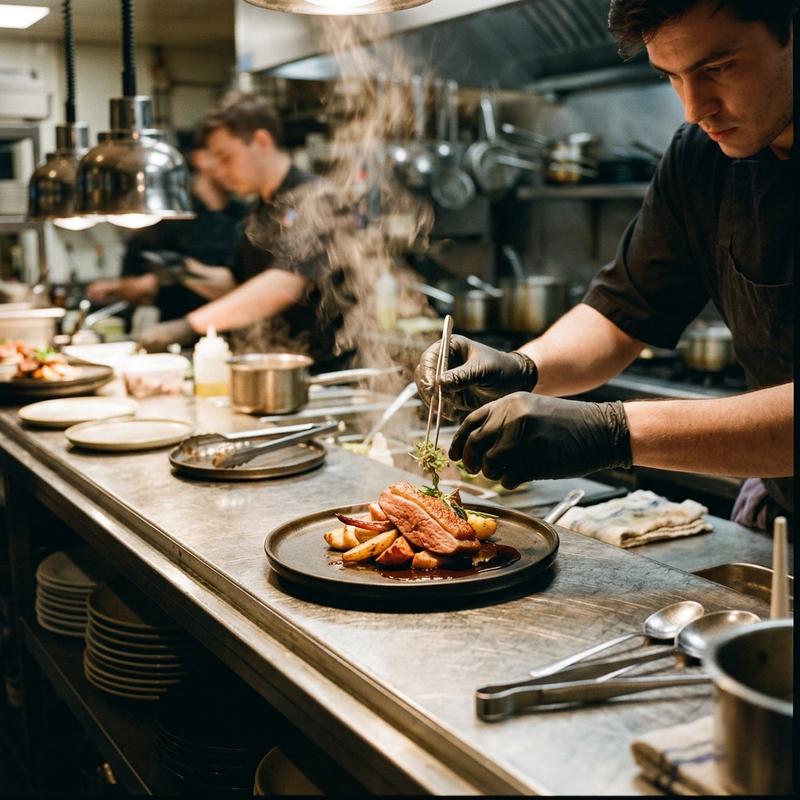
Founder continuity
They cannot solve every new demand by hiring another specialist. A founder-led producer already has the context; it simply lives in the founder's head. Capturing it lets a designer develop retailer assets without another briefing and a social lead draft seasonal content without drifting into category cliché. The immediate benefit is not automation; it is continuity.
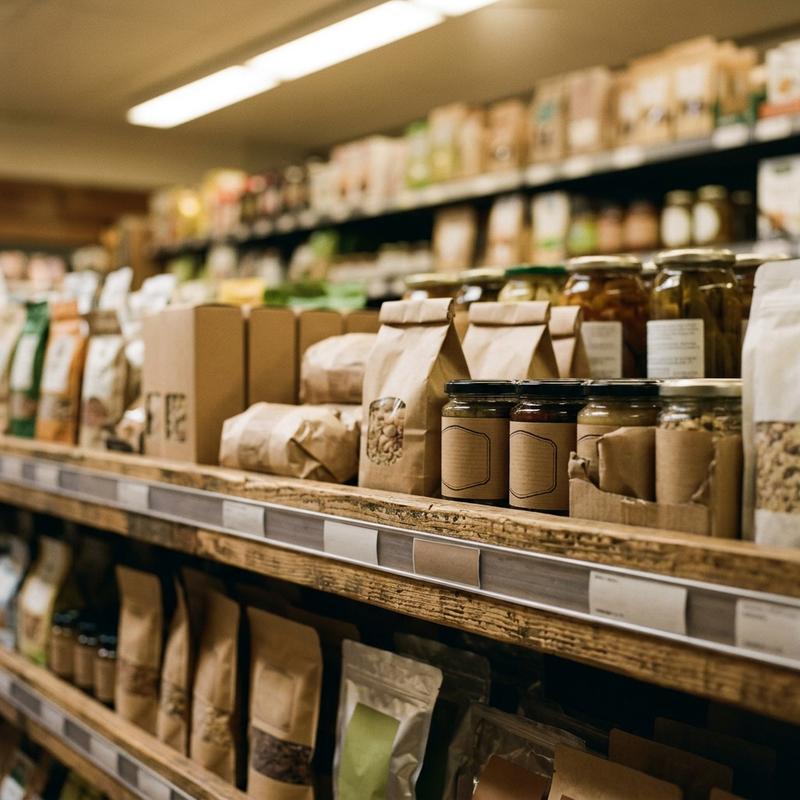
Retail & channel expansion
Channels, teams and portfolio expand simultaneously while internal systems still resemble those of a smaller company. This is the stage where agencies multiply, approvals slow and the Founder Ceiling starts to bite. Shared Context lets regional and channel teams adapt approved ideas within clear boundaries, and the central brand team shifts from correcting everything to designing the context within which others work.
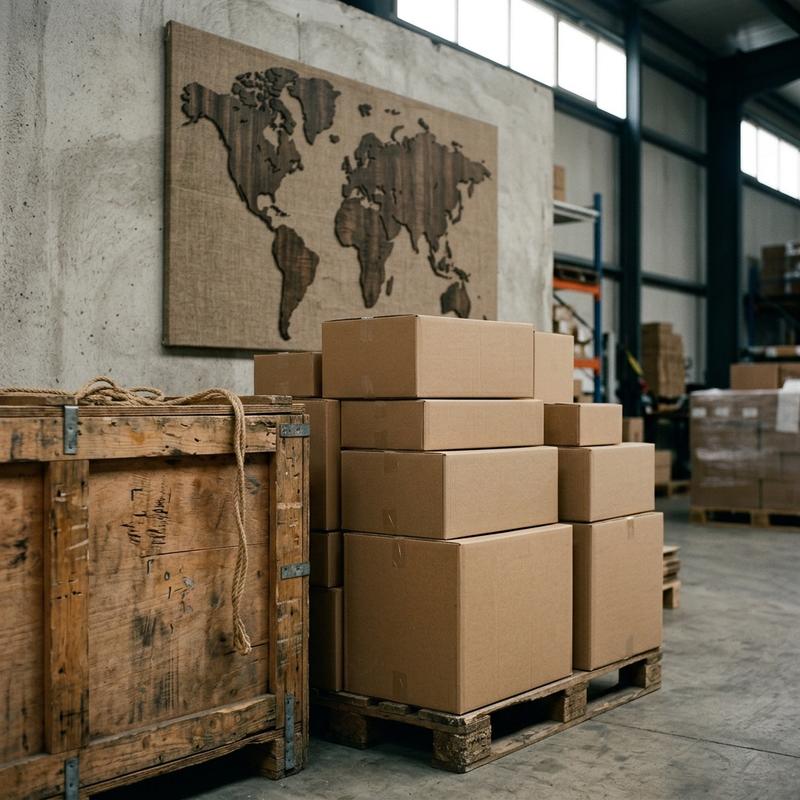
Export & market complexity
The challenge is rarely a lack of documentation but the distance between documentation and daily creation. Guidelines sit in asset-management systems, product information lives elsewhere, claims guidance belongs to regulatory teams. A brand-aware platform connects those layers and preserves the relationship between a local asset and the central campaign it came from — making complexity legible.
Begin with one forthcoming launch — not a platform migration.
One real product launch. Shared Context from day one.
A fourteen-day window forces a real launch through the system rather than a sandbox exercise — a forthcoming product, seasonal campaign or market adaptation already on the calendar. Brand and product context is configured first; channel adaptations and claims review follow inside one connected workflow.
Success is measured by whether the team spends less time reconstructing context, whether approved language travels with the work, and whether the outputs feel recognisably on-brand across pack, digital and trade — not by volume of content generated.

The 14-day first-launch pilot
| Stage | Focus | Principal activities |
|---|---|---|
| Week 0 | Launch selection & context audit | Choose one forthcoming product launch, seasonal campaign or market adaptation; document current asset paths, approval bottlenecks and where context is lost |
| Week 1 | Brand Hub & Shared Context | Configure product facts, approved claims, visual references and channel requirements; align Personas for consumer, trade and regional registers |
| Week 2 | Flow execution & review | Run master pack direction, channel adaptations and claims review inside one Flow; compare coherence and revision load against the usual process |
Buyer checklist — what to verify before committing
Prepare the launch
- Identify one real forthcoming launch with pack, digital and at least one trade or regional variant.
- Gather approved product facts, ingredient stories and market-specific claims guidance.
- Note where the founder or brand lead is still the final arbiter of “what feels right.”
- Document current revision rounds and regulatory review delays on similar launches.
Test with your launch
- Verify approved claims and product facts load automatically — not pasted per prompt.
- Generate channel variants (retail listing, social, foodservice) and assess register, not just wording.
- Confirm reviewers see the whole launch, not isolated files in email.
- Ask how localisation preserves central intent rather than copying copy verbatim.
Judge continuity
- Did the team spend less time searching for files and re-explaining the brand?
- Did approved language survive from pack through to ecommerce and social without drift?
- Did outputs feel recognisably the same brand across channels with appropriate variation?
- Can the Flow be reused for the next product or market without starting from zero?
The vocabulary this paper assumes.
Second Recipe
The accumulated sense of what the brand is and how it behaves — beyond the product formula. Packaging warmth, menu confidence, ingredient honesty, photographic rhythm and campaign personality.
Shared Context
Brand knowledge that travels with the work: visual and verbal principles, product portfolio, approved claims, channel requirements, campaign history and the reasons behind decisions.
Creative Continuity
Judgement travelling with the work across campaigns and markets, rather than being rebuilt for each launch. The outcome of a connected brand-aware system.
Founder Ceiling
The point at which the taste and judgement that built the brand becomes its bottleneck — when growth turns personal approval into a queue.
Claim substantiation
The evidence and regulatory basis required before terms such as “natural,” “healthy,” “organic” or health-related claims can appear in market-facing copy.
Localisation vs. translation
Translation converts language. Localisation interprets the centre for a market — adapting register, claims and cultural context without losing brand character.
Master pack vs. variant
The master pack is the approved primary packaging design and its governing assets. Variants adapt format, flavour, market or channel while preserving the underlying product story and regulated language.
The future is coherent, not uniform. Each expression should suit its audience — what connects them is shared intent.
Perhaps the Second Recipe is not a slogan. It is the system.
The strongest F&B brands have always understood that consistency begins with process. The product tastes the same because the recipe, the ingredients and the quality standards are held carefully, batch after batch. Creative work deserves the same attention — a system through which the organisation remembers what it is trying to preserve.
-
Not through one bad campaign, but through hundreds of reasonable decisions without shared context.
-
Context-loaded generation beats blank-prompt volume every time.
-
One product, one Flow, one measure of whether judgement travels with the work.

Explore Shared Context for your next launch.
We can begin with one forthcoming product launch, seasonal campaign or market adaptation — configured around your product facts, approved claims and channel requirements, so you can judge whether judgement travels with the work on your own brand.
References cited in this paper.
- US Food and Drug Administration, Food Allergies.
- European Commission, Mandatory food information and allergen requirements.
- UK Food Standards Agency, Allergen labelling for food businesses.
- Generative AI and Content Homogenization: The Case of Digital Marketing, SSRN, 2025.
- The Taste of Effort: Consumer Response to Generative AI Disclosure in Food Advertising, EMAC Proceedings, 2025.
- McKinsey & Company, State of Food and Beverage.
- NielsenIQ, E-Commerce 2.0: Navigating Today’s Omnichannel Environment.