



Whitepaper Premium Lifestyle Brands No. 01

Scaling creative production without losing your brand's point of view.

Premium brands don't lose their identity because they grow. They lose it because growth fragments the way their story is told.

14 minute read Six sections Published by Euryka

The premise

Premium brands don't become premium just because they produce better products.

They become premium because they express a distinctive way of seeing the world. A design philosophy. A cultural perspective. A sensibility customers recognise instantly and cannot find anywhere else.

Customers buy into that point of view long before they buy the product.

Which is why the greatest threat to a premium lifestyle brand is not competition. Not pricing pressure. Not even changing tastes.

It is the slow, quiet fragmentation of the way its story is told.

Section 01

In the early years, the founder is the brand system.

Nobody writes the rules down, because nobody needs to. Coherence lives in one mind that holds the entire picture — every headline, every photograph, every decision about what belongs to the brand's world and what doesn't.

  • Every campaign passes through one pair of hands

    The headline that matters gets rewritten at midnight.

  • Judgement is instant and unspoken

    Shown a photograph, they know immediately whether it belongs.

  • Then the brand triples in size

    And the picture leaves the building.

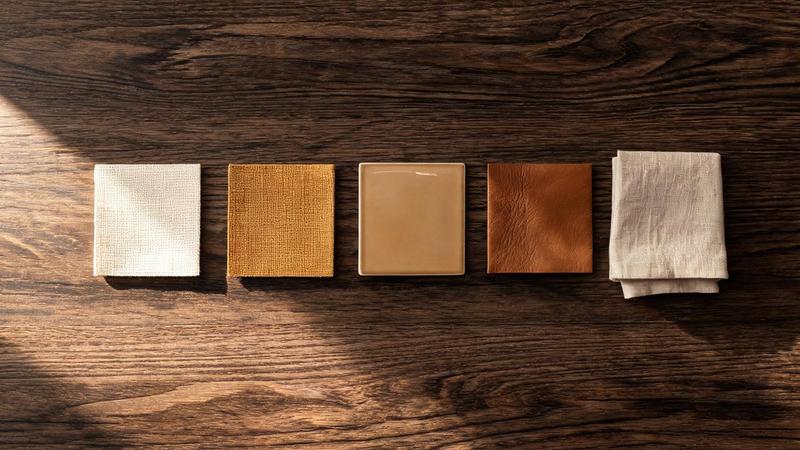
An art director's hands choosing one print from a dozen laid out under a single lamp
01 The founder ceiling

A website becomes a website, a journal, six social channels, a retail network, a gifting programme and two international markets.

Each needs its own team, and each team, however talented, reads the brand slightly differently. The copywriter hears the voice as literary. The social team, hired for platform fluency, hears it as playful. Retail drifts towards the practical, gifting towards the promotional.

Here is the uncomfortable part: none of them is wrong. Every one of them is on-brand by their own reading.

The customer, though, meets all of these readings in a single week. And what she experiences is not a point of view. It is a committee.

Figure 01 · One voice, read five ways

Copywriter

Literary

Reaches for cadence and metaphor.

Social

Playful

Hired for platform fluency, writes for the feed.

Retail

Practical

Drifts towards what helps close a sale.

Gifting

Promotional

Leans on occasion and urgency.

The customer

All of it, in one week

Experiences a committee, not a conviction.

The founder senses it before anyone else. The approval pile grows. More and more work comes back almost right. The brand sounds like itself less often than it used to.

So they do the two things every founder does. And both make it worse.

Instinct one

Hire more people

More people means more interpretations.

Instinct two

Write longer guidelines

Longer guidelines mean more documents nobody opens on deadline.

§

Scale doesn't dilute a premium brand. Fragmentation does.

§
02 The cost of fragmentation

Fragmentation shows up in the customer experience as inconsistency. It shows up in the business as time and money.

Consider what a single collection launch actually involves once a brand operates across channels.

Table 01

Anatomy of one collection launch

Traditional approach
Phase Timeline Owner
Design lockWeek 0Design team
Website copyWeeks 1–2Copywriter
Social assetsWeeks 2–3Designer
Editorial contentWeeks 2–3Editorial lead
Store communicationWeek 3Retail operations
Gifting catalogueWeeks 3–4Gifting specialist
International adaptationWeeks 4–5International team
Approvals and revisionsWeeks 3–6Leadership

4–6

Weeks, design lock to live

4–6

Full-time people involved

25–33%

Of marketing budget on production

2–3

Collections a year — the ceiling

Never attempted

Seasonal campaigns become too slow to attempt.

Always rushed

Festive gifting narratives get compressed into whatever time is left.

Never shipped

Occasion-led collections never leave the ideas stage.

The quieter problem

Because the channels finish at different times, launches go live staggered.

Website on Monday. Social on Wednesday. Retail on Friday. Gifting the week after.

The momentum that should compound across channels dissipates instead. Early customers buy on one channel before the others are live. By the time the full story is told, the audience has moved on.

Figure 02 · Staggered go-live across a launch week

Website
Social
Editorial
Retail
Gifting
MonTueWedThuFriNext wk

With a Brand System · one coordinated go-live

All channels
MonTueWedThuFriNext wk

The real cost is not the production spend. It is the revenue from campaigns never run — and the erosion of the very coherence that justifies premium pricing.

Where the time actually goes

Almost none of it is spent deciding what the collection means. Almost all of it is translation.

That meaning work was done months earlier, in design. The four to six weeks go into turning one approved idea into a website story, then a social caption, then a retail brief, then a gifting page, then an international variant.

Translation is necessary. But it is not where a creative team earns its keep.

Figure 03 · A useful test for any brand leader

What percentage of your creative team's week is spent creating something new, versus adapting something that already exists?

Most premium brands today

Create 30%
Adapt 70%

With a Brand System

Create 70%
Adapt 30%

That ratio is the production ceiling, expressed as a number.

Shelves of identical plain white vases repeating down a bright aisle

Section 03

Faced with this, most brands reached for the obvious shortcut.

ChatGPT for copy. Image generators for visuals. Template tools for layouts. The results were predictable — generic output, interchangeable with every other brand on the feed.

  • Trained for broad appeal

    Which is precisely what a premium brand must avoid.

  • Blind to context

    It knows neither the brand's world nor its audience.

  • Faster fragmentation

    AI without brand context accelerates the problem it was hired to solve.

03 Why generic AI isn't the answer

Watch it happen. A luxury home brand asks a generic tool for Instagram copy and receives a sentence any brand could publish.

Figure 04 · The same brief, two outputs

Generic AI Interchangeable
“Elevate your home with our handwoven collection. Each piece is crafted with care. Shop now and transform your space.”
  • Nothing about the design philosophy.
  • Nothing about cultural heritage.
  • Nothing about the person it's speaking to.
Within a Brand System Unmistakable
“These textiles are conversations between craft traditions and contemporary living. Each pattern carries intention. Find your edit.”
  • Assumes a design-literate reader.
  • Assumes a pull towards cultural meaning.
  • Assumes curation, not consumption.

The difference is not style. It is substance. The second version could only have been written by someone who knows exactly who is listening.

The commoditisation trap

When every brand uses the same tools with the same prompts, their content converges.

The same phrasing. The same visual tropes. The same rhythm. A mass brand can live with that, because volume compensates. A premium brand cannot, because its entire economic model rests on being unmistakable.

Every generic caption published under your name spends a little of the distinctiveness you took years to build.

A long rail packed with dozens of near-identical ivory linen shirts
§

Speed without coherence just gets you to the wrong place faster.

04 The Brand System

Not another marketing tool. Not another AI assistant. A system that captures how the brand thinks before it scales how the brand creates.

The founder's instinct — the thing that made the brand coherent in its early years — has to move out of one person's head and into an operating system the whole organisation works within.

That is not a document. Documents describe. An operating system enforces, generates and coordinates.

Figure 05 · What a Brand System does

I

It locks the context

Everything that makes the brand distinctive is captured as a living system, not a PDF.

  • Precise, not adjectival

    The exact colour palette in values, not “warm tones”. Photography mood defined by lighting, styling and composition.

  • The core narrative

    What the brand stands for. Who it speaks to, and what that customer values.

  • The seasonal register

    How the story shifts between monsoon and festive. How the voice flexes per channel while staying the brand's own.
II

It generates within the context

One approved collection direction produces many expressions — all generated inside the brand's constraints, never from a blank prompt.

  • No briefing relay

    The creative lead stops briefing five people and waiting three weeks.

  • Review, then select

    A set of options generated within the brand's own rules; the strongest picked from each category.

  • Judgement stays human

    Production runs in parallel. Taste does not get automated.

III

It coordinates the output

Teams stop interpreting the brand independently. They express one voice through clearly defined channel personas.

  • Confidence downstream

    The retail coordinator writes knowing the output will feel like the brand.

  • Drafted in parallel

    Reviewed together. Approved once.

  • One go-live

    Every channel on the same day. The story lands whole.

Table 02

One voice, five registers

Channel personas
Channel Persona Tone Focus
WebsiteEditorialNarrative, educationalDesign thinking, cultural context
SocialStorytellerPoetic, visual-firstAesthetic moment, emotional resonance
RetailGuideAccessible, warmHow to live with the pieces
GiftingCuratorCelebratory, meaningfulOccasion, relationship
JournalPhilosopherThoughtful, culturalCraft traditions, philosophy

Each persona is an expression of the brand, not a deviation from it.

Section 05

Euryka built this Brand System. Four connected layers.

Plus a services arm to put it in place — because a system this close to a brand's identity cannot be self-serve software alone. It has to be fitted, the way good tailoring is fitted.

  • Brand Hub

    Holds the context — and enforces it.

  • Imaginations & Personas

    Generate visuals and hold the voice, inside that context.

  • Flows & Studio

    Coordinate every channel; the team that fits it to your brand.

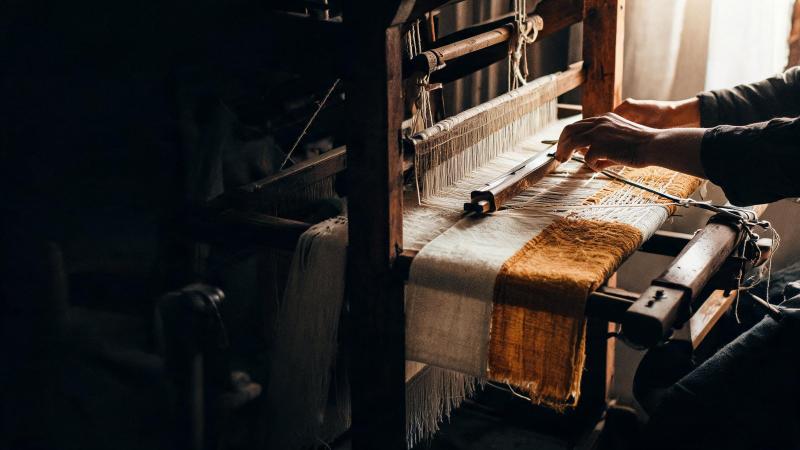
A hand loom with an ochre textile half woven on it, hands at work in warm light
05 How Euryka makes this possible

The founder's eye, made available to every team, on every brief, at any hour.

The Brand Hub workspace in Euryka, showing saved brand contexts and their collections
Layer 01

Brand Hub

Brand Hub holds the context. The palette is not just saved; it is enforced. The narrative framework is not just described; it shapes how copy is written. Seasonal archetypes steer which creative directions get generated at all.

Think of it as the founder's eye, made institutional.

The Imaginations workspace in Euryka, showing generation sessions and a prompt panel with model options
Layer 02

Imaginations

Imaginations generate visual concepts within that locked context. For a monsoon collection, that means monsoon-specific imagery in your particular aesthetic.

  • Five room styling concepts, each a different emotional angle.
  • Ten product photography directions, all minimal and intentional.
  • Three campaign mood boards, all aligned to the narrative.

Options arrive in hours. The art director curates rather than chases.

The Personas library in Euryka, showing specialist AI personas such as Brand Strategist and Copywriter
Layer 03

Personas

Personas keep the voice consistent as different teams produce content. The website reads as Editorial. Social reads as Storyteller. Retail reads as Guide.

Different registers, one unmistakable voice. No forty-page tone document that nobody opens.

A Flow canvas in Euryka, wiring text, voiceover, image and composition nodes into one launch
Layer 04

Flows

Flows coordinate everything simultaneously. Design locked. Visuals generated. Copy drafted across every channel. One review. One approval. Every channel live together.

The launch becomes a single coordinated event rather than a relay race.

The services layer

Euryka Studio is the team that builds it around you.

Studio sets up the Brand Hub, configures the personas, designs your first collection Flows, and works alongside your team through the first launches — until the system runs itself.

This matters because no two premium brands have the same workflow. A system this close to the brand's identity cannot be self-serve software alone. It has to be fitted, the way good tailoring is fitted.

Two colleagues working side by side over swatches and layouts at a large table
At a glance

Traditional approach, next to a Creative OS.

The saved cost is reallocated to what actually builds the brand: deeper editorial storytelling, international expansion, richer retail experiences, customer insight.

Metric Traditional approach With a Creative OS
Design-to-live timeline4 to 6 weeksAround 2 weeks
Channel launchesStaggered, days apartSimultaneous, same day
Production cost per collectionBaseline60–70% lower
Creative time spent adapting70%+Under 30%
Collections per year2 to 34 to 6
Revision cycles3 to 5 rounds1 to 2 rounds
Brand voice consistencyVaries by teamLocked centrally

The team

The creative team returns to concept development, aesthetic innovation and trend research — the work only humans can do.

The calendar

A two-week turnaround makes monsoon stories, festive gifting narratives and occasion-led collections genuinely executable — at the moment demand peaks.

06 What changes when production stops being the bottleneck

It is worth pausing on what this actually unlocks — because the timeline compression is the least interesting part.

01 · Cultural time

The brand can respond to culture in real time.

A trend, a moment, a conversation the brand has something genuine to say about. With a two-week turnaround, participation becomes possible without compromising craft.

02 · The calendar inverts

From “what can we afford to launch” to “what does the brand want to say”.

Production capacity stops dictating brand strategy. The question at the start of the year changes shape entirely.

03 · Markets compound

New markets become additive rather than exhausting.

International adaptation happens inside the same system, with the same locked context. Expansion no longer means re-briefing the brand from scratch in every geography.

04 · Quality rises

Counterintuitive, but consistent.

When a creative team spends seventy percent of its time adapting, its best thinking is rationed. When adaptation is systematised, the team's full attention returns to the work only humans can do.

§

The ceiling was never creativity. It was always coordination.

A single ivory vessel and a folded ochre throw lit on a dark console at dusk

In closing

Creating with coherence.

Over the next decade, the competitive advantage of premium brands won't be how much content they produce. It will be how consistently they express a distinctive point of view across every interaction.

AI won't replace creativity. It will amplify the systems that protect it. The brands that succeed won't simply create more — they'll create with greater coherence.

That's the future Euryka is building toward.

Next step

Explore what a Brand System would look like for your brand.

We'll start with a short working session around one of your upcoming collections — no deck, no pitch. Just your calendar, your channels, and where the time is actually going.

Euryka · Whitepaper No. 01 · Premium Lifestyle Brands

Book a demo to see Euryka in action!

Please use a business email to be connected with our sales team.

By submitting this form, you agree to Euryka AI's Terms of Service and Privacy Policy.