Brands Have Grammar. Most AI Doesn't Know Yours.
Premium lifestyle brands are built on something almost invisible.
Not the products. Not the logo. Something quieter: a way of seeing the world that customers recognise instantly. The restraint in the photography. The words a brand would never use. The colour that appears everywhere without anyone quite noticing.
Call it the brand's grammar. Unwritten rules about what to say, what to leave unsaid, and what unmistakably belongs.
Customers may never consciously register this grammar. But they know, immediately, when it breaks.
And here is the uncomfortable truth: it is breaking inside most growing lifestyle brands right now.
The committee problem

In the early years, coherence is easy. The founder is the system. Every campaign passes through their hands, every headline gets rewritten at midnight, and one mind holds the entire picture. Nobody writes this knowledge down, because nobody needs to.
Then the brand grows. The website gets a team. Social gets another. Retail, gifting and editorial each get their own hands. And each hand, however talented, reads the brand slightly differently.
The copywriter hears the voice as literary. The social team, hired for platform fluency, hears it as playful. Retail drifts towards the practical, gifting towards the promotional.
None of them is wrong. Each is on-brand by their own reading.
But the customer meets every version in the same week. And what should feel like a point of view starts to feel like a committee.
The instinctive fixes make it worse. More people means more interpretations. Longer guidelines mean more documents nobody opens on deadline.
Meanwhile, the numbers quietly compound. A single collection can take four to six weeks to reach every channel, with launches going live staggered: website on Monday, social on Wednesday, retail on Friday. The momentum that should build across channels dissipates instead.
And in most premium brands, creative teams spend over seventy percent of their time adapting work that already exists, rather than creating anything new.
That ratio is the ceiling most lifestyle brands are pressed against, whether they have named it or not.
Why generic AI makes it worse

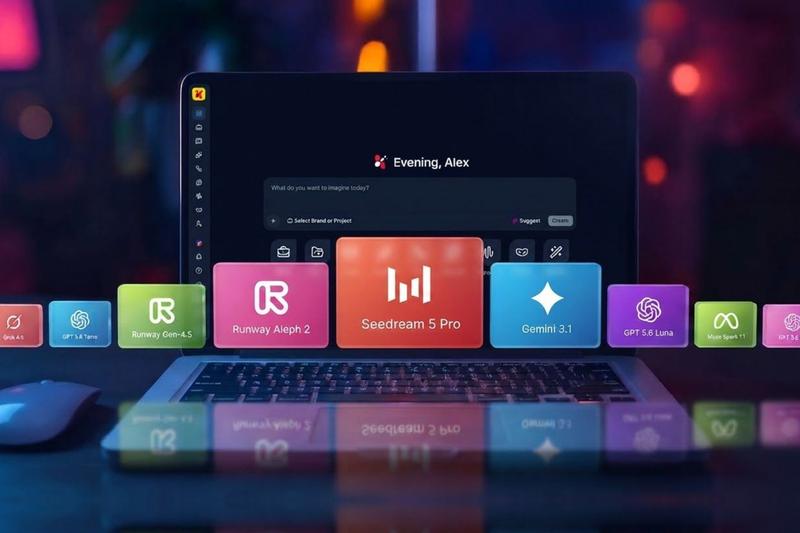
The obvious shortcut is the one everyone has tried: generic AI tools for copy, images and layouts.
The results are predictable. Polished, fast, and interchangeable with every other brand on the feed.
Ask a generic tool for Instagram copy and you get lines any brand in the world could publish. "Elevate your home. Crafted with care. Shop now." Nothing about design philosophy, nothing about cultural heritage, nothing about the person it is speaking to.
Generic AI is trained for broad appeal. Broad appeal is precisely what a premium brand must avoid. Every generic caption published under your name spends a little of the distinctiveness you took years to build.
The problem was never that AI writes badly. It is that it does not know who is listening, and it does not know your grammar.
What Euryka does differently
Euryka starts from the opposite end: capture how the brand thinks before scaling how the brand creates.
Brand Hub holds your grammar. The exact palette, the typography, the photography mood, the voice and its seasonal registers, captured once as living context rather than a PDF nobody reads. Not just saved: enforced. Think of it as the founder's eye, available to every team, on every brief, at any hour.
Personas carry that voice into every channel. The website speaks as the Editor. Social as the Storyteller. Retail as the Guide. Gifting as the Curator. Different registers, one unmistakable voice, zero drift.
Imaginations generates visual concepts inside your locked aesthetic. Campaign directions, styling explorations and format variations that already look like you, arriving in hours rather than weeks. The art director curates rather than chases.
Flows coordinates the launch. One approved collection idea becomes the website story, the social set, the retail brief and the gifting edit, reviewed once and live together, the same day. The launch becomes a single coordinated event rather than a relay race.
And Euryka Studio is the team that fits the system around your actual workflow. Studio sets up the Brand Hub, configures the personas, designs your first Flows and works alongside your team through the first launches until the system runs itself. No two premium brands work the same way, so the system is fitted, the way good tailoring is fitted.

The outcome is not more content. It is coherence at scale: launches that land whole, a creative team returned to creating, and a brand that sounds like itself everywhere.
Design-to-live drops from four to six weeks to around two. The creative week inverts, from seventy percent adapting to under thirty. Two or three collection stories a year becomes four to six, which means seasonal and occasion-led campaigns stop dying in the ideas stage.
The full argument
This post is the short version.
The long version examines why founder-led brands fracture as they scale, where the four to six weeks of every launch actually go, the commoditisation trap hiding inside generic AI, and what a brand system changes, with the before-and-after laid out properly.
If you lead a premium brand and any of this feels familiar, it is worth ten minutes of your time.
Read the full paper: Scaling Creative Production Without Losing Your Brand's Point of View