When everything can be generated, what does it mean to have an original idea?
We have spent a rather long time pretending that originality means creating something from nothing.
It doesn't.
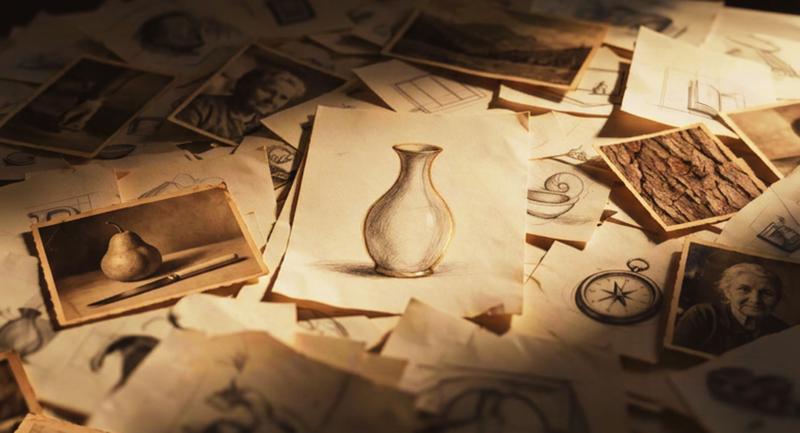
Every designer has references. Every writer has influences. Every musician borrows from what came before. Civilisation is essentially one long act of borrowing, improving, arguing and stealing politely from the past.
AI has not invented this. It has simply made the borrowing extraordinarily efficient.
For most of the creative industries, the difficult bit used to be making the thing. A photographer needed equipment. A designer needed years of practice. A filmmaker needed a crew and a budget. Generative AI is steadily removing that friction. Ask for a campaign, a soundtrack, a brand identity or a hundred alternatives and it will obligingly get to work.
Production is becoming abundant. Which leaves a more interesting question: what happens to originality when making becomes almost effortless?
What Is the Difference Between Novelty and Originality in Creative Work?
AI is very good at novelty. It combines references, styles and patterns in ways that can feel genuinely surprising.
But a new combination is not necessarily a new thought.
Human creativity has always been a conversation with what came before. We absorb influence slowly and messily, through experience, memory, culture, taste and accident. Something sits at the back of the mind for years and turns up in an entirely different context. AI does something similar at industrial speed.
That is not the death of originality. If anything, it exposes how much of our supposedly original work was already built from familiar ingredients. The endless minimalist interiors, cinematic portraits and vaguely luxurious campaigns did not appear because of AI. We were making them perfectly well before.
AI has simply become very good at showing us how repetitive we already were.

What Makes AI-assisted Writing Genuinely Original?
We like to think of originality as intellectual sovereignty: the idea began with me, therefore it is mine.
But almost nothing we think begins entirely with us. Language, culture, stories and references were already there when we arrived.
Perhaps originality has never meant creating from nothing. Perhaps it means taking what the world hands you and seeing a possibility in it that was not visible before.
So the question is not whether AI has influences. Of course it does. The question is whether there is a point of view behind the combination.
Which Brings Us, Awkwardly, to Copyright
Copyright was designed around identifiable works and identifiable authors. AI makes both messier.
If someone develops an idea, generates hundreds of versions, rejects most of them, edits the result and turns it into a finished piece, where exactly is the authorship? And if a model has learned from enormous quantities of existing work, where is the line between influence, imitation and copying?
The law is still working this out. The US Copyright Office has said AI-assisted works can be protected where there is sufficient human authorship, while a prompt alone does not necessarily establish it. Other jurisdictions are wrestling with training data, licensing and attribution.
But the deeper problem is this: copyright is very good at protecting things and considerably less good at protecting taste.
You can copyright a photograph. It is much harder to protect the sensibility that led someone to take it. You can protect a design. It is much harder to protect the way a designer sees proportion, colour and restraint.
What Makes a Body of Creative Work Harder to Copy Than a Single Asset?
As individual outputs become easier to reproduce, the thing worth protecting may not be the individual output at all.
A picture can be copied. A style can be imitated. A paragraph can be rewritten.
A distinctive body of thought is harder to fake. So is a creative universe built over years: its characters, visual language, ideas, references and internal logic.
You can copy one piece of someone's work. It is much harder to copy the mind that would have produced the next fifty.
This is how we think about it at Euryka. The value in our creative practice is not any single asset we produce. It is the accumulated thinking around the work: the methodology, the references, the decisions made and rejected, the reasons behind them. We call that Creative Capital, and it compounds. Every brief we take on makes the next one sharper, because the judgement travels even when the output does not.
In a world where anyone can generate a beautiful image in thirty seconds, the interesting question is no longer Who made this?
It is What body of thinking does this belong to?

So What Happens to the Creative Person?
The answer cannot be to compete with AI by producing more. The machine will win that contest.
The advantage sits in everything that happens before and after production: observation, curiosity, experience, taste, judgement and the ability to make connections that are not immediately obvious.
That means developing a point of view rather than merely a style. Reading outside your field. Paying attention to people. Bringing something to the work that did not originate inside a prompt box.
It also means learning to reject things that look impressive but have nothing to say. That may become the most valuable creative skill of all.
This is why our own way of working keeps people in the chair. AI does the exploring; it produces the hundred variations quickly and cheaply. But a human decides which one carries the idea, which ones to kill, and whether the brief was worth answering in the first place. The machine accelerates the search. It does not get to define what we are searching for.
AI can make almost anything look finished. It cannot tell us whether it was worth making.
Originality, After AI
The irony is that AI may make originality more important precisely because it makes production less important.
When everyone has the same extraordinary machinery, the machinery stops being the differentiator. The differentiator becomes the person directing it.
Not the person who can generate the most, but the person who can recognise something worth generating. Not the person with the most elaborate prompt, but the person with the most interesting question. Not the person who produces one remarkable image, but the person capable of producing a hundred things that unmistakably belong to the same mind.
Originality is not purity. It is not the absence of influence or creating from nothing.
Originality is the ability to take what already exists, see what others have missed, and turn it into something that could only have come from your particular way of thinking.
AI can help with the making. It can help with the exploring. It can get us much further, much faster.
But someone still has to decide where further is.
That, for now, remains the interesting part.

Where Euryka Stands
This is the belief our creative practice is built on. We use AI every day, across brand, content and design work, and that is exactly why we have stopped treating the machine as the interesting part. It explores; it produces the hundred variations quickly and cheaply. A person decides which one carries the idea, which ones to discard, and whether the brief was worth answering at all. Every decision, reference and rejected route is kept, so the thinking compounds from one project to the next. We call that Creative Capital. It is the body of work behind the work, and it is the one thing no prompt can copy. If that is the kind of originality you are after, we should talk.
Let's Talk
If you are working out where AI belongs in your creative process, or where it does not, we would like to hear about it. Euryka Studio works with brands, founders and teams who want the speed of the machine without losing the point of view that makes the work theirs. Send us a note or book a conversation, and bring the brief you are unsure about. Those are usually the interesting ones.
Continue the Conversation
If originality, judgement and creative work are changing, these essays explore the wider questions around that shift. Read why AI is making imagination more valuable, what a workplace shaped by AI will expect from its leaders, and why confident predictions about AI so often miss the point.